REVIEW · HO CHI MINH CITY
HCM: Cu Chi Tunnels-Tapioca Small Group Tour Morning or Afternoon
Book on Viator →Operated by KIM TRAVEL · Bookable on Viator
Underground Vietnam feels real fast. This Cu Chi Tunnels small-group tour is built around the feeling of going under the war, then surfacing with clear context on how the Viet Cong survived and fought. You start with war relics and short films, then you move into the tunnel system where life depended on tight spaces, clever hiding spots, and traps.
I especially like the small-group format (max 25) because it keeps the day from turning into a mad rush. I also really like the easy pickup and drop-off from Ho Chi Minh City districts 1, 3, and 4, with an air-conditioned minivan and guided time built in. One key consideration: the optional crawl can be very tight and low, so if you’re uncomfortable in enclosed spaces, you’ll want to think twice.
Half-day tunnels leave the afternoon open, and the combo crowd solves it in one booking: the Cu Chi and Mekong Delta day with the coconut village stop stacks both icons, and the Cu Chi tunnels site posts the official entry fees your tour price should already include.
In This Review
- Key things to know before you go
- Cu Chi Tunnels is where the war stops being abstract
- Hotel pickup in Districts 1, 3, and 4 keeps your day simple
- Before you crawl: films and war relics that set the mood
- The tunnel maze: tight spaces, hidden entrances, and real survival logic
- Crawl vs. skip: how to decide without ruining your day
- Cassava and tapioca: the snack that turns into a lesson
- The small “factory” stop and Agent Orange craft area: expect it, shop only if you want
- Time, comfort, and what to pack for Cu Chi heat
- The guides make or break the story
- Who this Cu Chi Tunnels small-group tour fits best
- Should you book this Cu Chi Tunnels tour?
- FAQ
- How long is the Cu Chi Tunnels tour from Ho Chi Minh City?
- What’s included with the ticket besides the tunnel entry?
- Do I have to crawl through the tunnels?
- Where are pickup and drop-off points?
- How big is the group?
- What happens if the tour is canceled due to weather?
Key things to know before you go
- Pickup from Districts 1, 3, and 4 makes Cu Chi a lot less stressful
- Documentary film + a 3D-style war screening sets the stage before the tunnels
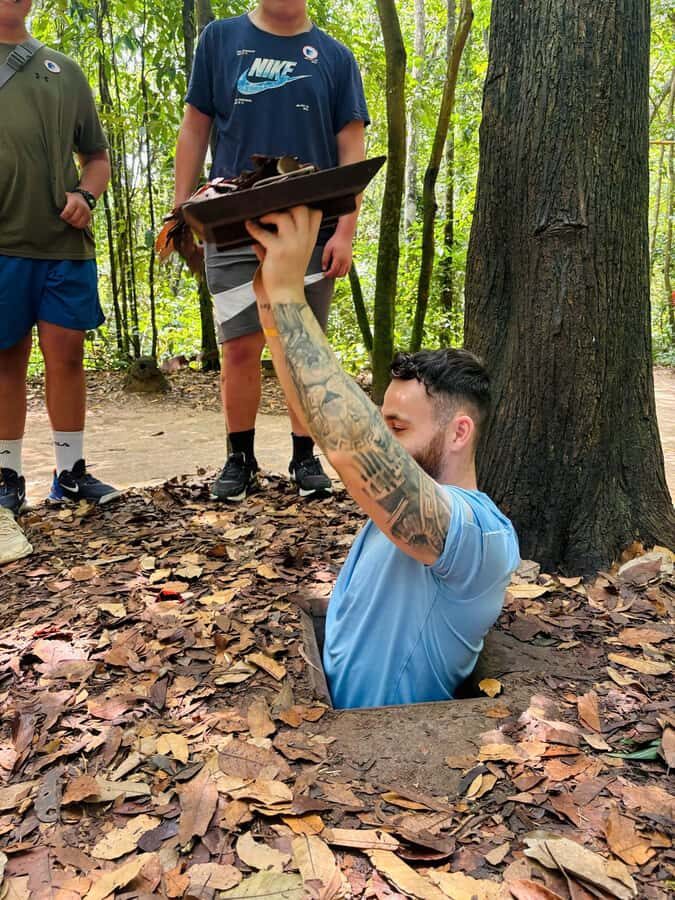
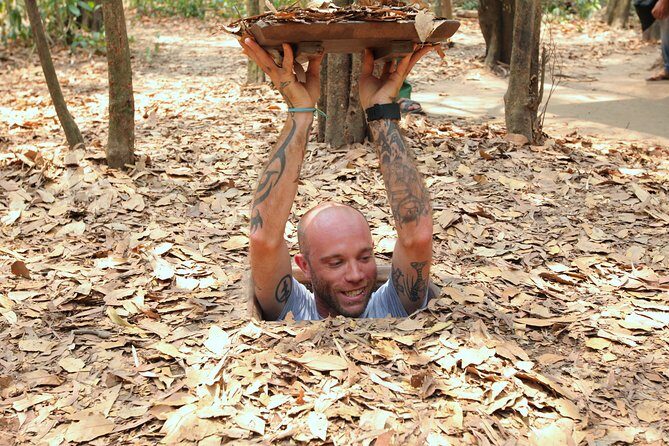
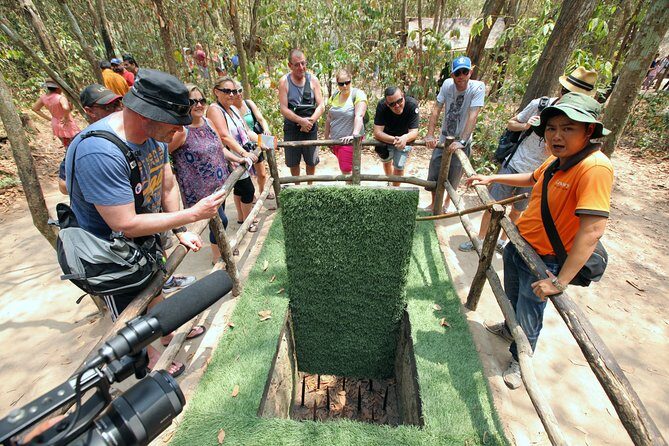
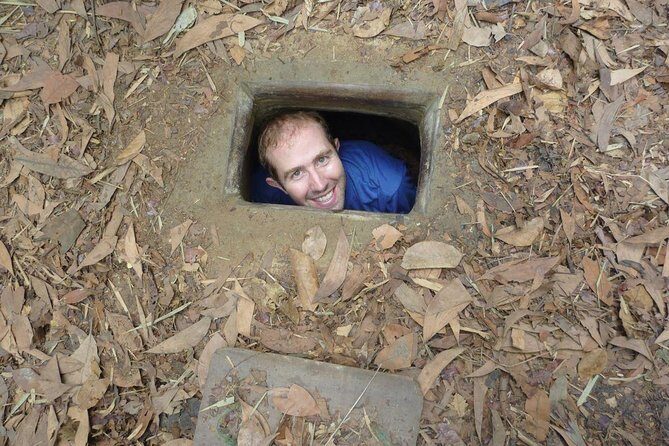
- Tiny hiding entrance trial helps you judge the space before any crawl
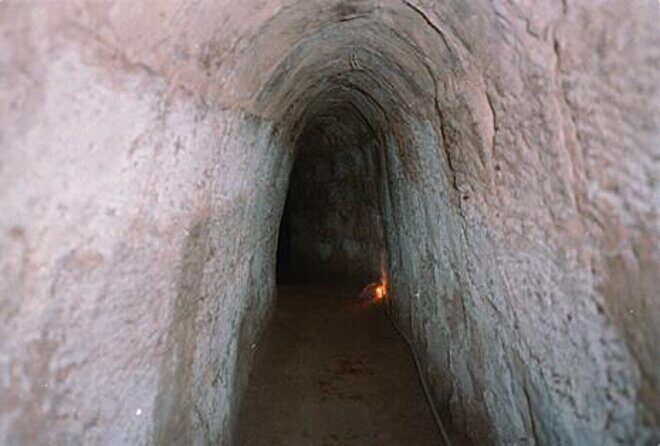
- Tunnel highlights include storage areas, kitchens, field hospital spots, and command-style spaces
- Cassava is part of the experience (not just a souvenir story)
- Optional tunnel crawl is described as a narrow, low passage experience
Cu Chi Tunnels is where the war stops being abstract
Paying $14.90 for a tour like this is mostly about value in logistics and access. For that money, you’re not just buying entrance. You’re getting an English-speaking guide, an air-conditioned minivan, round-trip structure (pickup and drop-off), and several pieces of the experience bundled together: war exhibits, documentary screening, tunnel time, and snacks.
Here’s what you’re really buying: a guided, paced introduction to one of the most famous tunnel systems tied to the Vietnam War (American War). The Cu Chi complex isn’t presented as a trivia stop. You’re shown how underground living worked between 1961 and 1972, including how people moved, hid, and sustained operations in cramped conditions. That context matters because without it, the tunnels can feel like a neat museum set.
Other morning Cu Chi Tunnels tours from Ho Chi Minh City



Hotel pickup in Districts 1, 3, and 4 keeps your day simple
The biggest practical win is the pickup. The tour collects people from hotels in Ho Chi Minh City’s Districts 1, 3, and 4 and returns you to District 1. That means less taxi-hopping, fewer missed turns, and no scavenger hunt for buses at the start.
Expect a full day on the clock (about 7 hours), with the Cu Chi site visit built around an admission portion of about 2 hours. Cu Chi is roughly 60 km from the city, and the drive time can realistically land anywhere from about 1.5 to 2.5 hours depending on road and weather conditions. In other words: plan for travel time to be real, even when the tour is well organized.
Because it’s max 25 people, I like that you generally don’t feel like you’re in a huge crowd. It also helps your guide manage counts and keep the group together at busy moments.
Before you crawl: films and war relics that set the mood
The tour begins by orienting you to what you’re about to see. You’ll watch a short film screening connected to the Vietnam War, and there’s also mention of a 3D-style movie about a major American ground operation. At the same time, the provided information also notes the documentary film screening as part of what’s included.
So how should you plan? Treat the included film screening as the baseline. If a 3D option is offered during your visit, it may be handled separately from the standard program. Either way, the goal is the same: you should understand the scale of operations and why tunnels mattered before you shrink into one.
From there, you move into the war exhibits area. This part includes items like bunkers, guns, and traps, presented alongside explanations of how the system worked. The traps theme is especially important: many first-timers picture tunnels as simple escape routes. The better way to think about it is as a layered defense strategy.
The tunnel maze: tight spaces, hidden entrances, and real survival logic
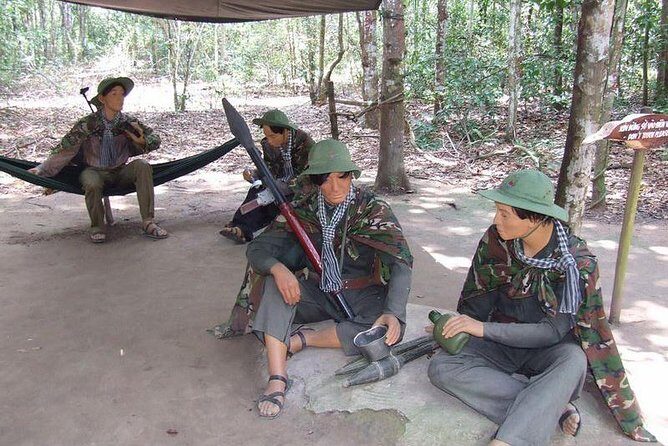
This is the main event: you explore the underground tunnel system designed for movement, concealment, and survival. You’ll see the complex layout and learn how different parts supported day-to-day life between 1961 and 1972. Expect to hear about storage spaces, factories-style areas, field-hospital spaces, command centers, and kitchens. The point isn’t just to name locations; it’s to understand how survival had to be organized underground.
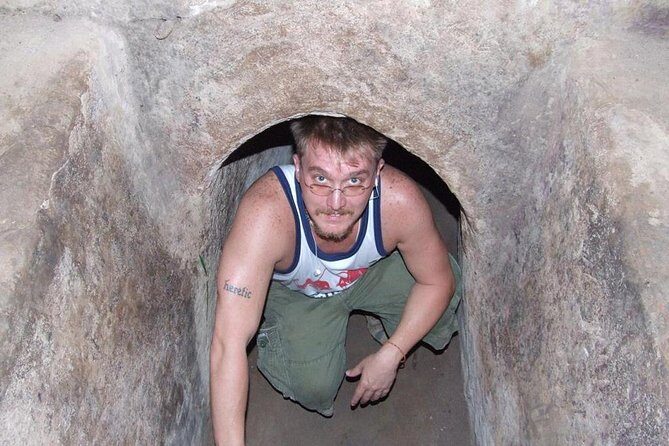
One practical, helpful touch is that the tour includes an interactive moment where you try a tiny hiding entrance. That’s a smart way to prep you for what crawling means here. Even if you decide not to do the optional crawl, you still get the “feel” of the space.
Then, if you choose to continue, there’s time to go into the tunnels yourself. The optional crawl experience is described as a narrow, low passage where the standard tunnel crawl is around 60 meters and roughly 4 feet high. That doesn’t leave room for big comfort. You’ll be crouching, squeezing, and moving slowly. If you hate claustrophobia or tight head space, treat the crawl option as the part to evaluate carefully.
Also note the current layout is modified for safety. The tour information describes that passages have been widened and simplified today for visitors. That means you may not experience every historical level in the way you’d imagine from old diagrams, even though longer routes can still reach deeper portions. You’re seeing the system, but it’s been adjusted to work for modern bodies.
Crawl vs. skip: how to decide without ruining your day
You don’t have to force the crawl to enjoy the tour. The tunnels themselves are the attraction, and the guide time helps you connect what you’re seeing to real war strategy. If you’re tempted by the optional crawl, decide based on how you handle tight, low spaces.
Here’s my rule of thumb for Cu Chi: if you can comfortably crouch and tolerate a few minutes of pressure around your body, the optional crawl can be the unforgettable part. If not, you can still get value from walking the exhibits and doing the interactive entrance trial.
Either way, bring a mindset of humility. This is not a “fun adventure playground.” It’s an experience of survival engineering. Slow movement is part of the respect here.
Other afternoon Cu Chi Tunnels tours from Ho Chi Minh City



Cassava and tapioca: the snack that turns into a lesson
One of the most memorable included pieces is food. The tour includes cassava—described as the popular food during war days at Cu Chi. It’s served as part of the experience, not as an afterthought, which matters because it connects everyday survival to the underground story.
You also get tapioca and Vietnamese hot tea, plus items like wheat cake and wet tissues, along with bottled water. That small meal-and-tea rhythm does more than fill you up. It helps you step back from the tunnels, warm up, and digest what you just learned.
If you’re sensitive to heat or long drives, the tea and snacks can take the edge off. It also makes the whole thing feel less like a museum sprint.
The small “factory” stop and Agent Orange craft area: expect it, shop only if you want
There is also a stop that centers on an Agent Orange-related handicraft area. The tour information doesn’t promise it in the headline highlights, but the day can include an awareness-focused workshop-style stop tied to the legacy of Agent Orange victims.
The important part for you: purchasing souvenirs is described as voluntary. If you don’t want to shop, you can keep it simple—take the breaks, use the facilities, and move on. If you do want to buy something, treat it as supporting a message and community effort, not a mandatory expense.
From a time-and-energy perspective, this stop functions like a structured pause during a long day. That can be helpful after tunnel time and the heat outside.
Time, comfort, and what to pack for Cu Chi heat
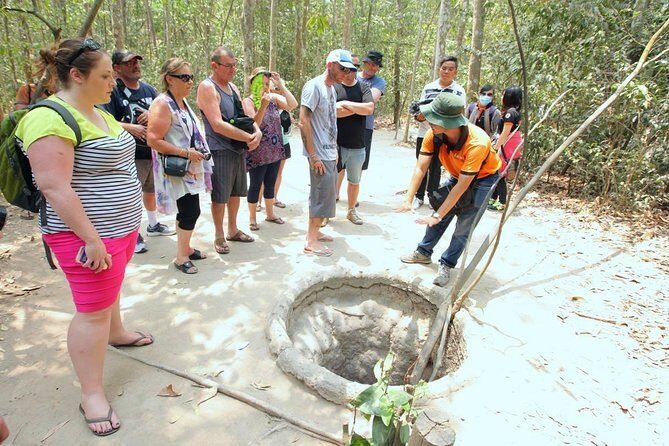
Even with an air-conditioned minivan, Cu Chi can feel sweaty. You’re outside in the forest area, you walk between points, and then you spend time underground where breathing and movement are different.
What I’d pack (or wear) for this kind of visit:
- light layers you can move in
- closed shoes you can handle on uneven ground
- something for sun protection (hat or cap)
- patience for slow crawling moments if you choose the crawl
One more comfort note: some people find the tunnel experience too short or too focused on a single crawl segment. The tour information frames the crawl as optional and the total on-site admission time as around two hours. So the tunnels can’t be an all-day deep exploration. That’s not a flaw so much as the trade-off for a full guided day from Ho Chi Minh City.
The guides make or break the story
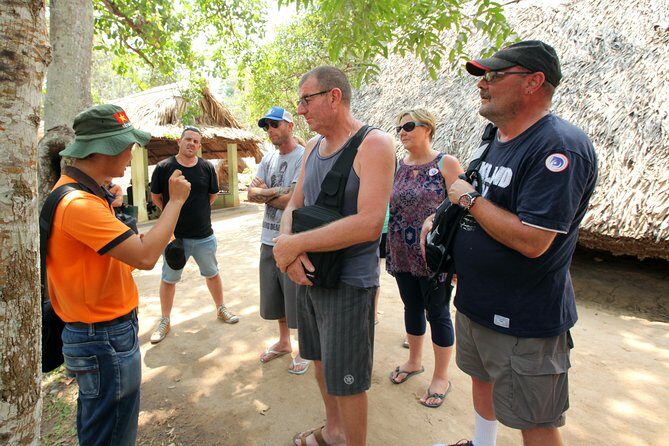
This tour depends on the guide’s ability to turn rooms, objects, and tunnel bends into a story you can follow. Many English-speaking guides lead the day, and names you may hear include Bao, Khanh, Phong, Luna, Tommy, and Martin. The common thread is clear, structured explanations—often with humor and pacing that helps you understand what you’re looking at.
If you land with a quieter guide or one who rushes, the experience can feel more like a checklist. If you land with a guide who explains the logic behind movement, traps, and daily routines, the tunnels become far more meaningful.
Who this Cu Chi Tunnels small-group tour fits best
This tour makes sense if you want:
- a budget-friendly Cu Chi experience with pickup and entrance included
- a guide-led story, not a self-guided museum wander
- a manageable group size (max 25)
- a day that balances exhibits, films, and tunnel time
It can work well for many people because the tour says most travelers can participate, and children just need to be accompanied by an adult. But if you’re sensitive to cramped spaces, the optional crawl is the moment that needs your honest decision.
Also: if you’re deciding between a Cu Chi-focused half-day style versus another Ho Chi Minh City area day trip, consider what kind of “wow” you want. Cu Chi delivers the shock of physical experience. A different tour might deliver more time outdoors or on the water. Choose based on what energizes you more.
Should you book this Cu Chi Tunnels tour?
If you want an organized, value-packed Cu Chi day from Ho Chi Minh City, I think this is a solid booking. The $14.90 price is hard to beat for pickup from nearby districts, an English-speaking guide, included screenings and exhibits, and food like cassava plus tea.
Book it if you’re ready for tight spaces and you’d like the experience to be structured and guided. Skip or think carefully about the crawl option if claustrophobia is a real issue for you.
FAQ
How long is the Cu Chi Tunnels tour from Ho Chi Minh City?
The tour runs about 7 hours, and the Cu Chi Tunnels admission portion is listed as about 2 hours.
What’s included with the ticket besides the tunnel entry?
You get hotel pickup (Districts 1, 3, and 4), air-conditioned minivan transport, an English-speaking guide, entrance fees, documentary film screening, bottled water, wet tissues, and snacks/food such as cassava and tapioca with Vietnamese hot tea. There’s also travel insurance listed as included.
Do I have to crawl through the tunnels?
No. Crawling through the Cu Chi Tunnels is listed as an optional experience. You can still explore the area and tunnel sections without doing the crawl.
Where are pickup and drop-off points?
Pickup is from hotels in Districts 1, 3, and 4 in Ho Chi Minh City. The tour drops you back in District 1.
How big is the group?
This small-group tour has a maximum of 25 travelers.
What happens if the tour is canceled due to weather?
If it’s canceled because of poor weather, you’ll be offered a different date or a full refund.