REVIEW · HO CHI MINH CITY
Cu Chi Tunnels tour In The Morning by DGT
Book on Viator →Operated by A Travel Mate And Trading Company Limited · Bookable on Viator
Five minutes underground and you get it.
This small-group morning outing has hotel pickup from Districts 1 and 3, plus a real feel for how Viet Cong soldiers lived and fought, not just a slideshow. I like that you get an English-speaking guide, snacks and drinks along the way, and then you actually enter the tunnels. One thing to consider: the story is told from a Vietnamese perspective, and if you want zero political framing, you may find it a bit one-sided.
I also like the practical pacing: you start early, reach the Cu Chi area without wasting half your day in traffic, and you spend your time where it matters. Still, it is hot, humid, and physical, so you should be ready for moderate walking and tight spaces.
In This Review
- Key Points to Know Before You Go
- Price and Time: $31 for a 5-Hour Morning That Doesn’t Waste Your Day
- Hotel Pickup From District 1 and 3: The Logistics That Make or Break the Morning
- Stop at Ben Dinh Tunnels: Documentary First, Then Practical War Engineering
- Entering the Cu Chi Tunnels: Small Space, Big Lesson
- War Story in Vietnamese Perspective: What You Should Expect to Hear
- How the Time Fills In: The Long Ride, the Short Stops, and the Heat
- What to Pack (So the Tour Feels Easier Than It Looks)
- Who This Cu Chi Morning Tour Suits Best
- Should You Book In The Morning by DGT?
- FAQ
- What time does the tour start?
- Where is the meeting point?
- How long is the tour?
- Is hotel pickup included?
- What’s included in the price?
- Is lunch included?
- What is the maximum group size?
Key Points to Know Before You Go
- Small group size (max 12), which usually means less waiting and more time to look closely.
- Ben Dinh setup first: documentary film, command center, and a few “how it worked” stops before you go into the tunnel areas.
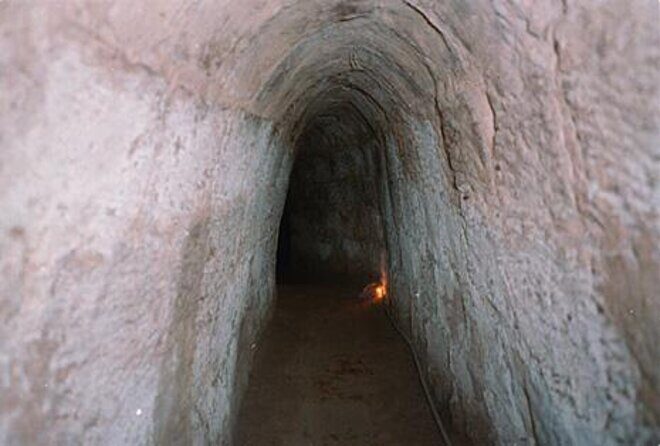
- Tunnel realism: the entrances are tiny, so you understand the confinement fast.
- Included drinks plus snacks: you’ll get a drink and tapioca with tea, which helps during the heat.
- Vietnam perspective on war history: plan to hear messaging, not a neutral debate.
- Hot jungle conditions: bring water patience and gear for humidity, not just curiosity.
Price and Time: $31 for a 5-Hour Morning That Doesn’t Waste Your Day

For about $31 and roughly 5 hours, this tour is built around transportation, a guide, and an actual site visit. The value comes from what’s bundled: hotel pickup and drop-off from Districts 1 and 3, English-speaking guiding, entrance to the tunnel area, plus drinks and a small food stop (tapioca and tea). For Vietnam, that’s a pretty efficient way to structure your day because you’re paying for access and interpretation, not just a transfer.
Do note what’s not included: lunch and personal spending. You’ll want a plan for food after the tour, especially if you like to eat slowly instead of grabbing something on the run. And because it’s a morning departure starting at 8:00am, you’ll likely want breakfast handled the night before or right before pickup.
Other morning Cu Chi Tunnels tours from Ho Chi Minh City



Hotel Pickup From District 1 and 3: The Logistics That Make or Break the Morning
The tour meets at 210 Lê Thánh Tôn, Phường Bến Thành, Quận 1 and starts at 8:00am. Pickup is offered from Districts 1 and 3, with drop-off back in the same areas. That matters because Cu Chi can’t really be done as a casual hop-on-hop-off trip. Having the transfer built in saves you the hassle of bargaining rides, timing buses, and figuring out routes on your own.
You also get a mobile ticket, so you don’t need to hunt for paper. If you’re traveling with a tight schedule, use the exact address details you have on hand and make sure you can be reached on WhatsApp, since confirmation and re-confirmation happen close to departure.
Finally, you’ll be riding in a van or small vehicle with a max group of 12. In general, smaller groups can feel more comfortable, but you’ll still feel bumps and heat during the ride, so keep that in mind if you’re sensitive to motion.
Stop at Ben Dinh Tunnels: Documentary First, Then Practical War Engineering
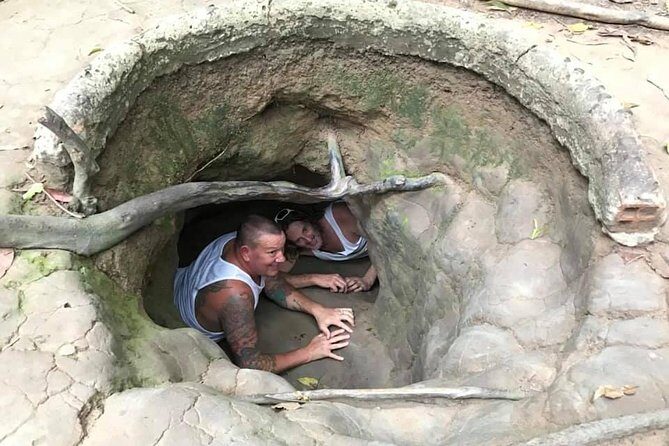
Before you go into the tunnel areas, you get oriented with a documentary film. That’s a smart move if you’re not already fluent in the war timeline, because it gives you the “why” behind the tunnels. It also helps you understand why the tour moves from command and strategy to daily survival details.
At Ben Dinh, the day leans into the nuts-and-bolts:
- You visit a command center, which helps connect the tunnels to coordination, not just hiding.
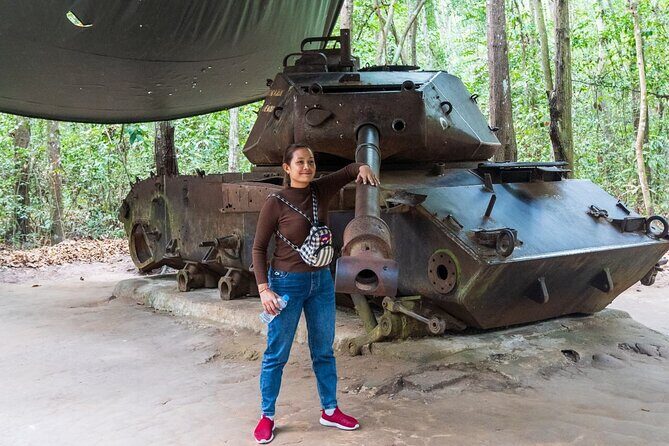
- You’ll see fighting bunkers and get shown handmade booby traps.
- You get to learn about Hoang Cam smoke-less stove, the kind of detail that makes the underground life feel real instead of vague.
- You stop for local tasting: steamed tapioca and hot tea.
This stop is where the guide’s job gets most important. The best explanation ties each feature to a problem soldiers had: how to move without being seen, how to keep going underground, and how to build defenses that don’t rely on open space. If your guide gives clear, calm context, the later tunnel crawling hits harder.
One practical consideration: the “local special food” and short breaks can make the schedule feel a bit tight. If you prefer slow browsing and lots of unhurried time, don’t expect that here. The tour is designed to cover the key parts within a half-day.
Entering the Cu Chi Tunnels: Small Space, Big Lesson
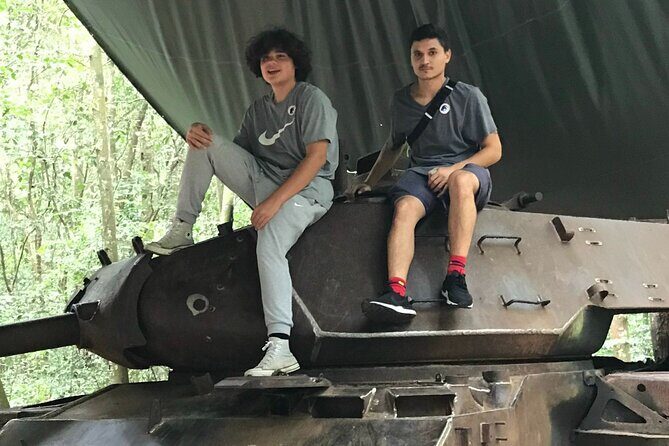
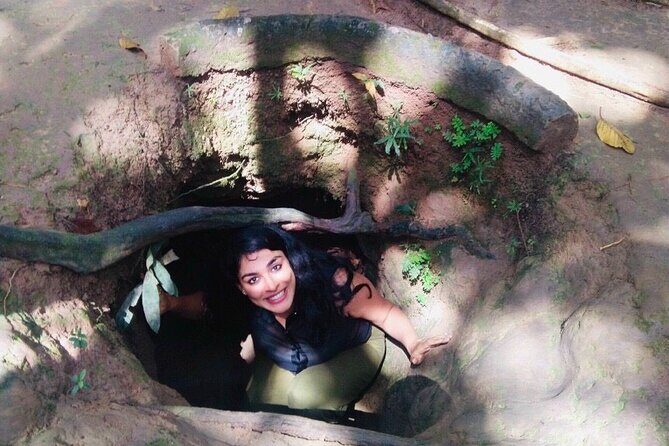
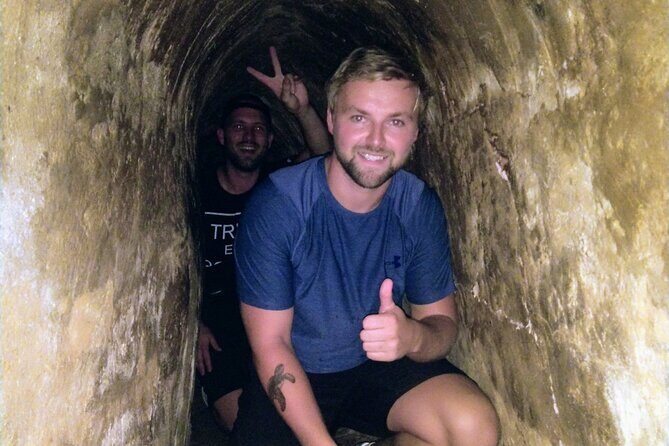
The main payoff is the tunnel time. Once you arrive, you’re not just walking past history—you’re stepping into the kinds of passages soldiers used. And the first thing you notice is the scale. Expect tight openings and compressed movement. One very common wow-moment is how small an entrance can be, so you immediately feel how confinement affects breathing, movement, and panic.
The tour format generally includes guidance while you navigate the tunnel complex, so you’re not wandering around underground alone. That matters because tunnels are disorienting by design. You’ll also likely see multiple functional spaces, since Cu Chi wasn’t just one tunnel you crawled through. It was a network meant for living, meeting, cooking, and storing supplies.
Here’s what makes this part valuable for you, even if you think you already know the basics. Going inside forces you to reframe the story:
- It stops being abstract.
- It turns into physical experience.
- You connect strategy to survival choices.
That said, it is not a casual stroll. You should be comfortable with moderate walking in humid outdoor conditions and then short stretches of crawling or moving through confined interiors. If you’re claustrophobic, this might be a tough fit.
War Story in Vietnamese Perspective: What You Should Expect to Hear
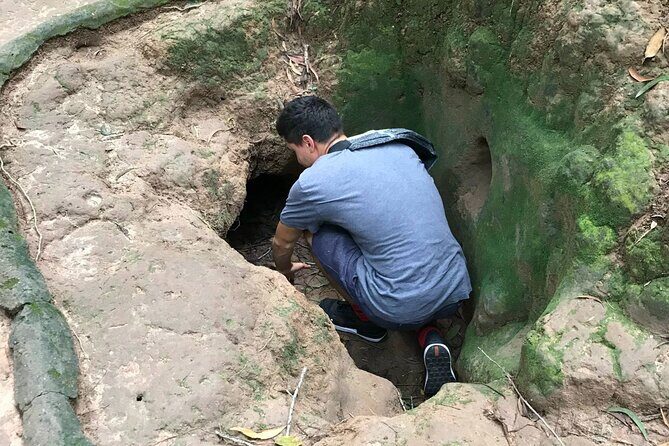
This tour’s interpretation is clearly from a Vietnamese angle. That’s normal for Cu Chi. The site is both history and national memory, and you should expect the guide to frame it that way. Some visitors come in expecting a perfectly neutral lecture and end up surprised by the messaging. If you’re sensitive to political tone, go in with the mindset of learning how Vietnam tells the story—not just what happened.
What I like about this approach is that it’s tied to the environment and the built features. You’re not only hearing claims; you’re seeing the infrastructure: the command setups, survival tools, and defensive design. Even if you personally disagree with how any conflict is framed, the engineering and daily-life aspects can still teach you something real.
Guides can vary in how they present it. You might get a guide with a great mix of humor and seriousness, like the styles associated with names you may hear on this circuit (Toan, Sonny, Foo, Lyn, Vu, Thanh, Typhoon Honey, Henry, Timmy, or Leo). If your guide is strong on English clarity, you’ll get more value from every stop—especially once you’re underground and the environment makes distractions harder.
A few more Cu Chi Tunnels tours and southern Vietnam experiences worth a look

How the Time Fills In: The Long Ride, the Short Stops, and the Heat
Cu Chi is outside the city, so travel time is part of your experience. It takes about 90 minutes from Ho Chi Minh City to Cu Chi when traffic cooperates. That means your morning is a rhythm: get picked up, travel, start with orientation, then move through Ben Dinh and the tunnel complex.
The heat is real. Even if you love history, you’re walking outdoors first, then going into hot, humid conditions where ventilation is limited. That’s why the included drink and small snack matter. When your energy dips, the tour can feel rushed. When you stay fueled, the tunnel time lands better.
One more timing note: after the tour, you’re back to the meeting point area. Because lunch isn’t included, you’ll want to plan what you’ll do when you’re back—especially if you’re the type who hates eating at random street stalls after a strenuous morning.
What to Pack (So the Tour Feels Easier Than It Looks)
This is where you can really improve your day. The tunnel part is short, but the conditions build up fast.
Bring:
- Comfortable shoes with traction (you’ll be walking on uneven ground in humid outdoor areas)
- A light layer that’s okay to get sweaty
- A small towel or something quick-drying (wet towel services may not always feel consistent)
- Sunscreen and a hat if you’re heat-sensitive
- Water discipline: drink the included water when it’s offered and keep sipping between stops
If you’re prone to motion sickness, keep an extra eye on how you feel during the road trip. Some people find the van ride tough, and since it’s a morning departure, you may not have time to “sleep it off” later.
Who This Cu Chi Morning Tour Suits Best
This tour makes the most sense if you want a focused half-day with real access and a manageable group size. The max 12 travelers is a big deal if you want to feel like you can ask questions and keep up without the tour bus feeling like a crowded classroom.
It’s also a good pick for families with older kids. You’ll see how the experience can work across ages, especially when guides manage pacing and humor well. If you’re traveling with a younger child, keep expectations realistic: the physical nature of moving through or near the tunnels may be harder for small kids than for teens.
You might want a different option if:
- you get claustrophobic
- you have mobility issues that make crawling and tight spaces stressful
- you strongly dislike political framing and want a purely academic presentation
But if you want a hands-on way to understand how people lived under severe constraints, this tour does that more directly than a typical museum stop.
Should You Book In The Morning by DGT?
I’d book it if you want a well-structured half-day with pickup, entrance included, and enough guiding to make the tunnel experience understandable. The $31 price works best when you factor in transport + guide + what you eat and drink, not just the site itself.
I’d think twice if tight spaces or political tone bother you. The war story is not neutral here, and the tunnels are physically small. If you can handle that, you’ll likely come away with a stronger mental picture than from any photo.
If your goal is to see Cu Chi without spending hours planning logistics, this is one of the most practical ways to do it—especially when you start at 8:00am and keep the day efficient.
FAQ
What time does the tour start?
The morning tour starts at 8:00am.
Where is the meeting point?
The meeting point is 210 Lê Thánh Tôn, Phường Bến Thành, Quận 1, Thành phố Hồ Chí Minh, Vietnam.
How long is the tour?
It runs for about 5 hours (approx.).
Is hotel pickup included?
Yes. Free hotel pick-up and drop-off is included for District 1 and District 3.
What’s included in the price?
Included items are an English-speaking guide, drink options (Vietnamese coffee/fresh coconut/juice/smoothie/beer/softdrink), tapioca and tea, Cu Chi tunnels entrance fee, and free pickup/drop-off from Districts 1 and 3.
Is lunch included?
No, lunch is not included.
What is the maximum group size?
The tour has a maximum of 12 travelers.