REVIEW · HO CHI MINH CITY
Ho Chi Minh City Cu Chi Tunnels Full Day Tour with Local Lunch
Book on Viator →Operated by Asia Travel Links · Bookable on Viator
War history, above and below ground. This full-day Ho Chi Minh City and Cu Chi Tunnels outing mixes French-colonial landmarks with the underground world Vietnamese soldiers built and used. I especially like that you get lunch included right in the middle of the route, so you’re not hunting for food between big, heavy stops.
The one thing to keep in mind is how much you’re actually inside each landmark. On some days, the Notre Dame Cathedral stop can feel more like a street-side viewing than an extended visit, and the pace stays tight because it’s a 12-hour day.
In This Review
- Key things that make this tour worth your time
- Why this Ho Chi Minh City + Cu Chi Tunnels day works (and costs about $45)
- Notre Dame Cathedral: a red-brick contrast with real street life
- Saigon Central Post Office: colonial architecture you can actually use as a landmark
- Reunification Palace (Independence Palace): where history becomes a physical place
- War Remnants Museum: one hour that hits hard (weapons and human toll)
- Lunch: the smartest mid-day break you can order by a tour time
- The ride to Cu Chi: rice paddies, rivers, buffalo, and birds
- Cu Chi Tunnels: video first, then hours exploring the maze
- Tea and guerrilla-style food: a practical end-of-tunnel snack
- Guide quality: how local context changes the whole day
- Price and value: what $45 gets you (and what it avoids)
- Who this tour suits best (and who might find it too intense)
- Should you book this full-day Cu Chi + Saigon highlights tour?
- FAQ
- How long is the Ho Chi Minh City and Cu Chi Tunnels full-day tour?
- What’s included in the price?
- Is lunch included?
- Does the tour visit Cu Chi Tunnels for several hours?
- What time does the tour start?
- Does the tour offer hotel pickup?
- Is there a maximum group size?
- Is a mobile ticket provided?
- Are drinks besides lunch included?
- Can I cancel for a full refund?
Key things that make this tour worth your time
- Local guide storytelling for the history links: you don’t just see sites, you get the thread connecting them.
- All entrance fees + lunch are built in: the $45 price is less “nickel-and-dime” than many days out.
- Major Saigon landmarks in one sweep: Notre Dame Cathedral, Central Post Office, and the Reunification/Independence Palace.
- War Remnants Museum sets the tone: weapons and the human cost are shown in a powerful, sobering way.
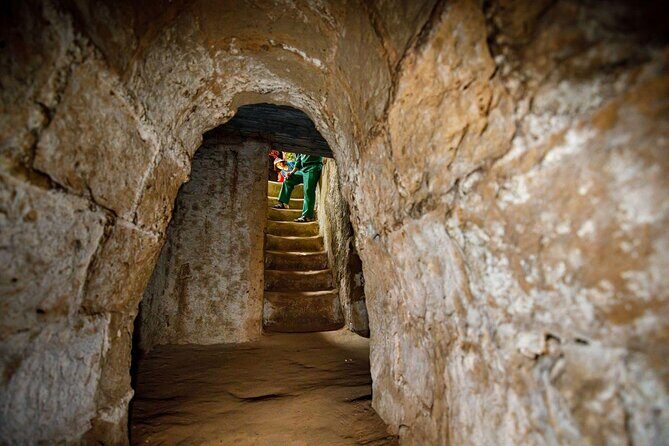
- Cu Chi Tunnels takes hours, not minutes: you watch a short video, then explore the maze-like network.
- A countryside break on the way out: rice paddies, winding rivers, water buffalo, and birds can turn the ride into a breather.
Why this Ho Chi Minh City + Cu Chi Tunnels day works (and costs about $45)
This is the kind of tour I recommend when you have limited time in Ho Chi Minh City but still want depth. You’ll start with the city’s best-known landmarks, then shift gears hard toward the war period—first through the War Remnants Museum, and then by going underground at the Cu Chi Tunnels.
At around $45, the value comes from what’s included: hotel pickup and drop-off in the eligible area, air-conditioned transport, a professional guide, bottled water, lunch, and entrance fees. In other words, you’re not paying separately for the big-ticket parts of the day.
Also, the group size cap is 15 travelers. That’s small enough for a guide to manage the flow at crowded stops without feeling like you’re stuck in a huge cattle line.
The tour runs about 12 hours, so plan your day around it. This isn’t a “wander at your own pace” style day. It’s a “see the essentials, then absorb the rest” day.
Other Ho Chi Minh City + Cu Chi combo tours from Ho Chi Minh City



Notre Dame Cathedral: a red-brick contrast with real street life
Ho Chi Minh City can feel like it’s always in motion, so it’s striking to hit the Notre Dame Cathedral stop during a city-highlight day. You’ll see its twin bell towers and the iconic red-brick façade from the French colonial era.
Here’s the practical angle: this is a stop where your experience may depend on how the day is run. The cathedral stop is sometimes more of a viewing from the street than a long indoor visit, and that’s worth factoring in if you were hoping for lots of time inside.
Even if that’s the case, the contrast is still useful. Getting your bearings with a landmark like this helps you understand what comes later in the day—especially the mix of colonial architecture and wartime context you’ll see on the next stops.
Saigon Central Post Office: colonial architecture you can actually use as a landmark
Next, the Saigon Central Post Office is one of those places that feels like a time machine, but it still functions as a building you can observe closely. It blends Gothic, Renaissance, and French influences, which is a great detail to remember because it explains why the structure looks so distinctly European compared with the surrounding streets.
This stop works well because it’s not just about taking pictures. It’s also an architectural reference point. Once you’ve seen it, you start noticing colonial styling elsewhere in the city more easily, especially if you come back to Saigon later on your own.
Expect this to be a shorter stop—enough time to look around and get the feel of the building, but not long enough to turn it into your main activity.
Reunification Palace (Independence Palace): where history becomes a physical place
The Reunification Palace—also known as the Independence Palace—gets center stage because it’s tied to the end of the Vietnam War. You’ll spend time here as part of the broader storyline of the day, and the big value is that you can see history in a setting, not just in a museum.
This stop is also a turning point emotionally. After the city architecture, the palace grounds bring you right into the political reality of the era. If you’re the kind of traveler who likes context—how decisions played out in real spaces—this is one of the stops that makes the rest of the itinerary click.
War Remnants Museum: one hour that hits hard (weapons and human toll)
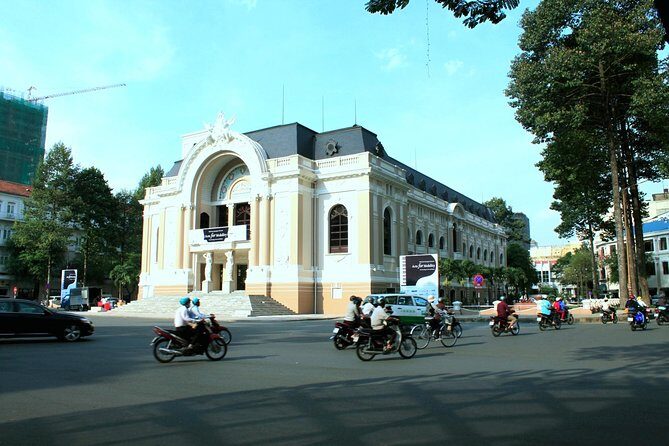
Then comes the War Remnants Museum, and it’s not subtle. The museum catalogs the conflict’s weaponry and human toll, using artifacts, photos, and stories to show what the war did to people.
I like that this museum is included on the same day as Cu Chi. You get to see the war from above ground first—how violence shows up through evidence and documentation—before you go down into the tunnels and experience the idea of survival through the built environment.
Plan to take your time inside. Even if your schedule feels rushed, this is the kind of place where you’ll want pauses. Don’t try to speed-run it. The point isn’t checkmarks; it’s understanding.
Other full-day Cu Chi Tunnels tours we've reviewed in Ho Chi Minh City






Lunch: the smartest mid-day break you can order by a tour time
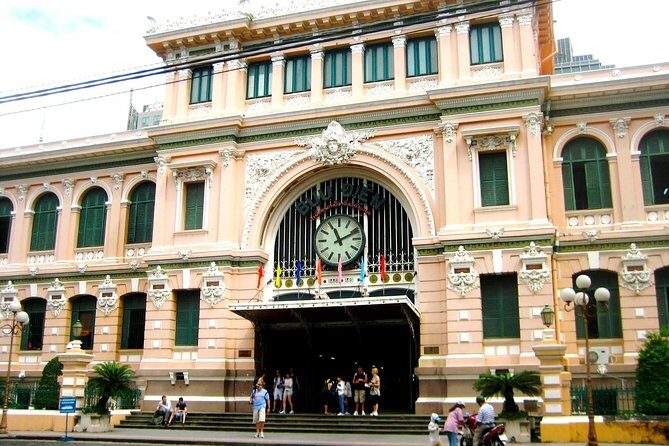
Lunch is included, and that matters more than it sounds. Midway through a day of intense history, you’ll want something predictable—especially with a 12-hour schedule.
The tour also provides bottled water. It’s a small detail, but it helps you stay comfortable between stops so you don’t lose energy just because you’re hungry or waiting to buy drinks.
The food itself is described as tasty in at least one standout experience, which is a good sign. When lunch is included on a long day, it’s often about convenience first. Here, it seems like it’s also meant to be enjoyable.
The ride to Cu Chi: rice paddies, rivers, buffalo, and birds
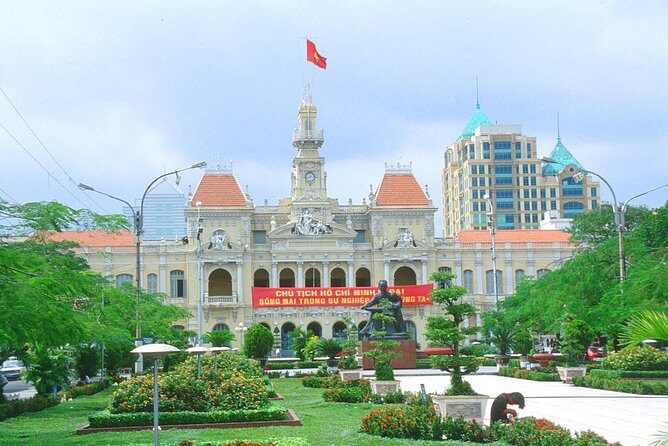
When you leave the city, the change of scenery is real. The drive out passes through a landscape of rice paddies and winding rivers, and you may spot water buffalo and water birds along the way.
This matters because Cu Chi can feel like a full sensory shift—light levels drop, the walls get close, and the history becomes physical. A calmer ride out helps you transition without feeling like you’ve been pushed straight from one extreme into another.
Think of the ride as a reset button. You’ll still be heading toward a heavy site, but the countryside adds breathing room.
Cu Chi Tunnels: video first, then hours exploring the maze
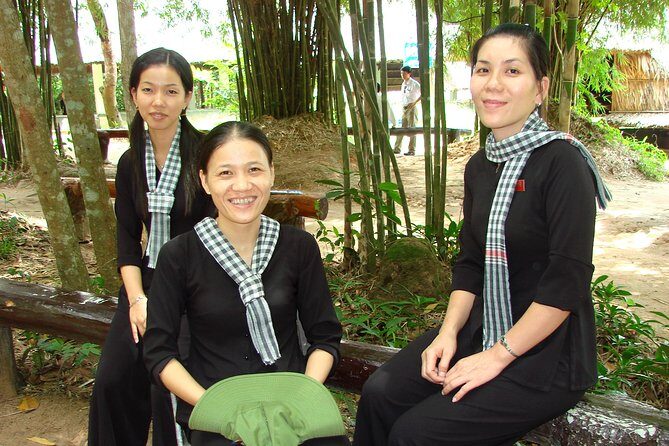
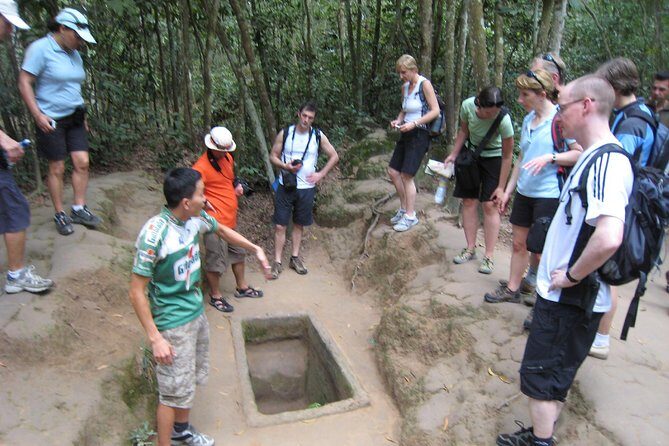
At Cu Chi, the tour starts with a short video about the history and construction of the tunnel system. That’s smart because it gives you a foundation before you walk into the network.
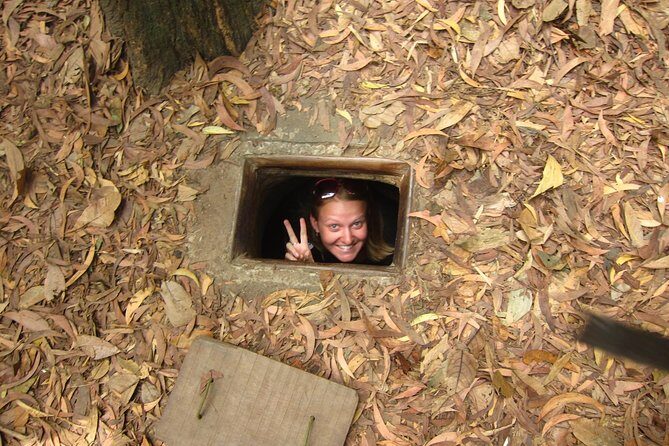
Then you spend several hours exploring the tunnels themselves. This is the heart of the experience: the network is described as maze-like, and it wasn’t just a hiding place. You can see how soldiers used it for daily life and survival, including areas that once functioned as hospitals, schools, kitchens, and sleeping quarters.
That range is what makes the tunnels so memorable. It’s not only engineering; it’s adaptation. You’re looking at an environment designed to keep people functioning under extreme conditions.
Also, expect the day to be both interesting and confronting. The tunnels are a history lesson you can move through with your own body, and that can be unsettling in a meaningful way.
Tea and guerrilla-style food: a practical end-of-tunnel snack
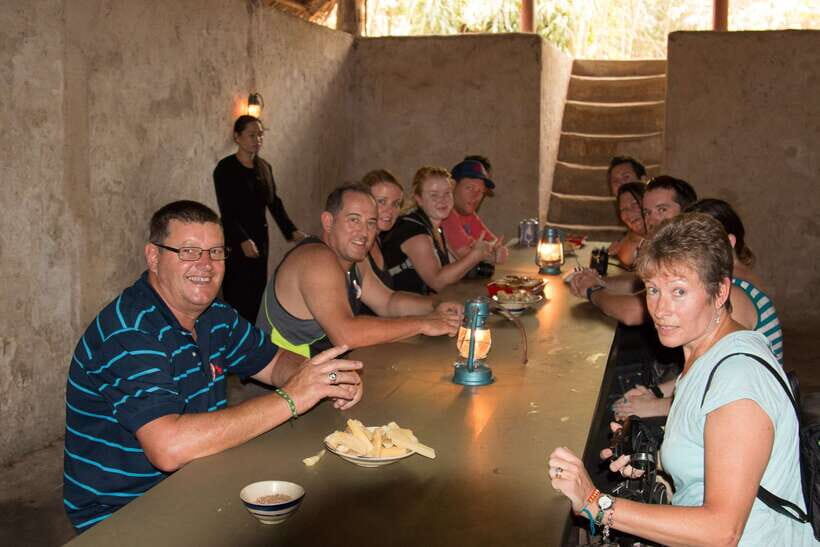
After your tunnel time, you’ll pause for a snack of tea and guerrilla-style food. This is a simple but useful moment because you’re going to be tired—mentally and physically.
It’s also a neat way to wrap the experience. You’re going from the engineered survival of the tunnels back into a small, guided taste of wartime-themed food and drink, which helps the story land as more than just architecture.
Guide quality: how local context changes the whole day
A tour like this lives or dies on the guide. The itinerary is heavy—colonial-era landmarks, a palace tied to the war’s end, a museum focused on weaponry and human toll, and tunnels built for survival.
That’s why the “local guide” part is a big deal. When your guide is strong, the facts connect into a timeline you can follow, instead of feeling like separate stops.
One guide name that shows up is Bin, praised for knowledge and a jovial personality. That mix matters. You want the seriousness handled respectfully, but you also want the day to move without turning into a silent, stuck feeling. A guide who can balance tone helps you stay engaged through the most intense parts.
Price and value: what $45 gets you (and what it avoids)
Let’s do the plain math of the value. For about $45, you get:
- Hotel pickup and drop-off in the eligible Ho Chi Minh City area
- Air-conditioned vehicle transport
- A professional guide
- Bottled water
- Lunch
- Entrance fees
So the price covers the “hard to DIY” parts: getting everyone to multiple sites in one day, managing timing, and paying entrance fees in a coordinated way.
If you tried to build this yourself, you’d likely end up paying for transport anyway, and you’d still need a guide to connect history across locations. Here, the guide does that work for you, and lunch keeps you from breaking the day into awkward segments.
Who this tour suits best (and who might find it too intense)
This tour is ideal if:
- You’re on a first visit to Ho Chi Minh City and want the major landmarks plus war history in one day
- You like guided context, not just sightseeing
- You want real time in Cu Chi—not a quick photo-stop
It can be less ideal if:
- You expect every landmark to be an extended indoor visit. The Notre Dame Cathedral stop can be more of a street viewing depending on how the day runs.
- You’re very sensitive to war-related content. The War Remnants Museum and the tunnels are confronting by design.
One extra note from the kind of day this is: adults and older teens can handle it, but the emotional weight is real. If you’re traveling with kids, I’d judge based on their maturity for museum-style history and the graphic themes at the War Remnants Museum.
Should you book this full-day Cu Chi + Saigon highlights tour?
If you want the best use of time—Saigon icons, the War Remnants Museum, and several hours inside Cu Chi Tunnels—then yes, this is a strong pick. The included lunch and entrance fees help keep the day straightforward, and the small group size is a nice bonus for comfort.
I’d book it if you like guided storytelling and you’re ready for a day that goes from colonial architecture to the war’s human impact, with very little fluff in between.
I’d think twice only if your top priority is long, relaxed stops at every building, or if you really need a lighter, less intense museum-and-tunnels day.
FAQ
How long is the Ho Chi Minh City and Cu Chi Tunnels full-day tour?
It’s about 12 hours.
What’s included in the price?
Hotel pickup and drop-off, air-conditioned transport, a professional guide, bottled water, lunch, and entrance fees.
Is lunch included?
Yes, lunch is included.
Does the tour visit Cu Chi Tunnels for several hours?
Yes, you’ll spend several hours exploring the tunnels after a short history video.
What time does the tour start?
The start time is 12:00 pm.
Does the tour offer hotel pickup?
Yes. Pickup and drop-off are provided at select hotels in Ho Chi Minh City’s eligible area.
Is there a maximum group size?
Yes, the tour has a maximum of 15 travelers.
Is a mobile ticket provided?
Yes, the tour includes a mobile ticket.
Are drinks besides lunch included?
No. Drinks are not included.
Can I cancel for a full refund?
Yes, you can cancel up to 24 hours in advance for a full refund.